2001 Ford Expedition Fuse Box Diagram: A Comprehensive Guide
Navigating the 2001 Ford Expedition’s electrical system is simplified with a detailed owner’s manual, offering fuse box locations and diagrams for effortless troubleshooting.
The 2001 Ford Expedition’s electrical architecture, detailed within the owner’s manual, is a complex network powering numerous vehicle functions. Understanding this system begins with recognizing the dual fuse box setup: a passenger compartment panel and an engine bay power distribution box. The owner’s manual provides crucial diagrams illustrating the location of each, alongside comprehensive fuse assignments.
These diagrams are essential for identifying specific fuses related to lighting, power windows, audio systems, and even the engine control system. Proper use of the owner’s manual ensures safe and effective troubleshooting of electrical issues, preventing damage and maintaining optimal vehicle performance. Familiarizing yourself with these resources is a proactive step towards responsible vehicle ownership.
Understanding Fuse Box Locations
The 2001 Ford Expedition, as outlined in the owner’s manual, features two distinct fuse box locations for efficient electrical system management. The primary location is within the passenger compartment, typically found under the dashboard on the driver’s side. The second is the engine bay power distribution box, usually located near the battery.
The owner’s manual provides precise diagrams pinpointing these locations, simplifying access for inspection and fuse replacement. Knowing both locations is vital, as different systems are protected by fuses in each box. Referencing the manual’s illustrations ensures you’re addressing the correct fuse panel when diagnosing electrical concerns, saving time and frustration.

Passenger Compartment Fuse Panel
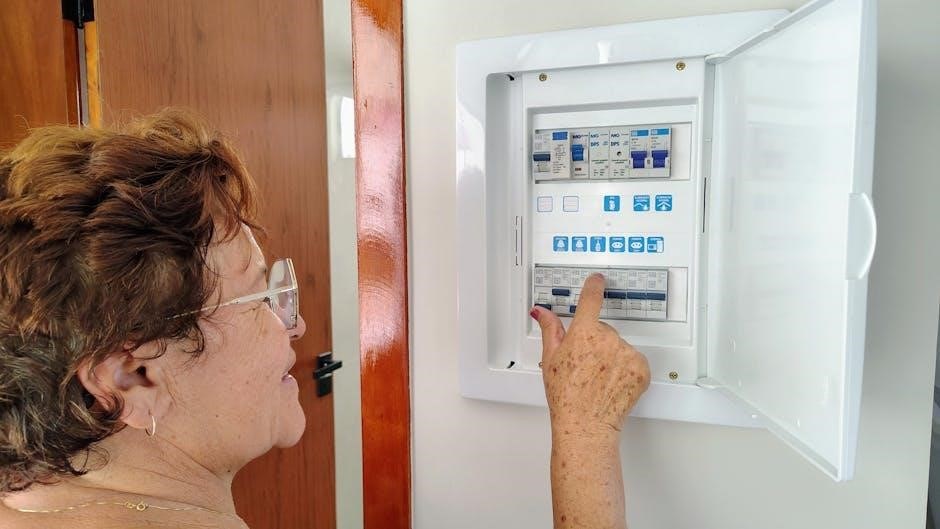
The owner’s manual details the passenger compartment fuse panel, typically located under the dashboard, protecting interior electrical components for convenient access.
Location of the Passenger Compartment Fuse Panel
According to the 2001 Ford Expedition owner’s manual, the passenger compartment fuse panel is strategically positioned for accessibility. It’s generally found on the driver’s side of the vehicle, tucked away beneath the instrument panel. Specifically, look for a rectangular cover located to the left of the steering wheel, often near the parking brake pedal.
To pinpoint the exact location, consult the diagram within your owner’s manual – it provides a visual guide. Removing this cover reveals the fuse panel itself, housing a variety of fuses that protect the vehicle’s interior electrical systems. The manual emphasizes that knowing this location is crucial for quick fuse identification and replacement, minimizing downtime and ensuring continued functionality of essential features.
Accessing the Passenger Compartment Fuse Panel
The 2001 Ford Expedition owner’s manual details a straightforward process for accessing the passenger compartment fuse panel. Begin by locating the panel, as previously described, on the driver’s side beneath the instrument panel. Gently grasp the retaining clips or tabs securing the fuse panel cover. These are designed for easy release, preventing damage during removal.
Once the clips are disengaged, carefully pull the cover downwards or outwards, depending on the specific design. The manual cautions against using excessive force. The fuse panel will now be visible, revealing the individual fuses. It’s recommended to have a flashlight handy for better illumination and fuse identification. Remember to consult the fuse diagram within the manual before attempting any fuse replacement.
Fuse Diagram – Passenger Compartment (Detailed View)
The 2001 Ford Expedition owner’s manual provides a comprehensive fuse diagram for the passenger compartment panel. This diagram illustrates each fuse’s specific location, corresponding amperage rating, and the electrical component it protects. Key systems covered include the lighting, power windows, audio system, and various interior accessories.
Carefully referencing the diagram is crucial for accurate fuse identification. The manual often uses color-coding and numerical designations to simplify the process. Common fuse ratings range from 5 to 20 amps. Understanding the diagram allows for quick diagnosis of electrical issues and proper fuse replacement, ensuring optimal vehicle functionality. Always consult the manual before making any changes to the fuse configuration.
Fuse Identification and Ratings (Passenger Side)
The 2001 Ford Expedition’s passenger side fuse panel, as detailed in the owner’s manual, houses fuses protecting essential interior functions. Common fuses include those for the radio (typically 10-15 amps), interior lights (5-10 amps), power windows (20-30 amps), and the anti-lock brake system (ABS) (10-20 amps).
Fuse identification relies on both color-coding and amperage labeling. The owner’s manual provides a precise chart correlating each fuse position with its specific function and rating. Incorrect fuse replacement can lead to system malfunction or even electrical damage. Always verify the correct amperage before installing a new fuse, prioritizing safety and vehicle integrity.
Common Fuses and Their Functions (Passenger Side)
Referring to the 2001 Ford Expedition owner’s manual, several passenger-side fuses frequently require attention. The power windows fuse safeguards operation, while the power door locks fuse ensures secure locking/unlocking. The radio fuse protects the audio system, and the cigarette lighter/accessory fuse powers related outlets.
Interior lighting, including dome and map lights, is protected by a dedicated fuse. The instrument cluster fuse maintains display functionality, and the windshield wiper fuse controls wiper operation. Understanding these common fuses, as outlined in the manual, allows for quick diagnosis and repair of everyday electrical issues, minimizing downtime and ensuring vehicle convenience.

Engine Bay Power Distribution Box
The owner’s manual details the engine bay box, housing critical fuses and relays for systems like fuel delivery and engine control, vital for operation.
Location of the Engine Bay Power Distribution Box
According to the 2001 Ford Expedition owner’s manual, the Engine Bay Power Distribution Box is typically located within the engine compartment, usually on the driver’s side. Specifically, it’s often found near the battery, and sometimes positioned against the inner fender well. Identifying its precise location requires a visual inspection under the hood, referencing the diagram within the manual for clarity.
The manual emphasizes that this box protects vital engine and chassis electrical components. It’s a black, rectangular plastic box with a snap-down cover. Accessing it is crucial for diagnosing and resolving electrical issues related to starting, charging, and various engine functions. The owner’s manual provides a clear illustration pinpointing the exact placement for easy identification.
Accessing the Engine Bay Power Distribution Box
The 2001 Ford Expedition owner’s manual details a straightforward access procedure. First, ensure the vehicle is turned off and the key is removed from the ignition. Locate the Power Distribution Box as described previously. Most models feature a snap-down cover secured by clips; gently release these clips to lift the cover.
The manual cautions against forcing the cover, as this could damage the retaining clips. Once open, the fuses and relays are clearly visible. It’s recommended to have a flashlight handy for better illumination, especially in low-light conditions. The manual also advises against working on the electrical system with wet hands or in wet conditions to prevent short circuits.
Fuse Diagram – Engine Bay (Detailed View)

The 2001 Ford Expedition owner’s manual provides a comprehensive engine bay fuse diagram. This diagram illustrates each fuse’s specific location, amperage rating, and corresponding circuit protection. Key fuses include those for the fuel pump, ignition system, and various sensors. The manual emphasizes the importance of referencing this diagram before attempting any fuse replacement.
It details how to interpret the fuse numbering system and color-coding. Relays are also mapped, indicating their function – such as the fuel pump relay or the cooling fan relay. The manual warns against substituting fuses with incorrect amperage ratings, as this could lead to electrical damage or even a fire hazard. A clear, labeled diagram is crucial for accurate identification.
Fuse Identification and Ratings (Engine Bay)
The 2001 Ford Expedition’s engine bay fuse box, as detailed in the owner’s manual, houses fuses of varying amperage. Common ratings include 10A, 15A, 20A, and 30A, protecting circuits like the fuel pump (typically 20A), ignition coil (15A), and various engine sensors (10A). The manual stresses the importance of always replacing a blown fuse with one of the exact same amperage.
Fuse identification relies on a numbering system and color-coding, clearly illustrated in the manual’s diagrams. Incorrect fuse replacement can cause significant electrical damage. The manual also notes that some circuits may utilize mini-fuses, requiring specific fuse pullers for safe removal and installation. Referencing the manual’s chart is vital for correct identification.
Relay Locations and Functions (Engine Bay)
The 2001 Ford Expedition’s engine bay relay center, as outlined in the owner’s manual, manages critical functions beyond simple fuse protection. Relays, often larger and rectangular, control high-current circuits like the fuel pump, starter, and cooling fan. The manual provides a detailed diagram pinpointing each relay’s location and corresponding function.
Common relays include the fuel pump relay, essential for engine operation, and the cooling fan relay, preventing overheating. Identifying the correct relay is crucial; the manual emphasizes matching part numbers. Replacing a faulty relay often resolves intermittent electrical issues. Caution: Disconnect the negative battery terminal before relay removal or installation, as detailed in the owner’s manual’s safety guidelines.
Troubleshooting Electrical Issues with the Fuse Diagram
Utilizing the 2001 Ford Expedition’s fuse diagram, detailed within the owner’s manual, is the first step in diagnosing electrical problems. Begin by identifying the affected system – lights, windows, or audio – and locate the corresponding fuse on the diagram. A blown fuse is often indicated by a broken filament. The manual stresses the importance of visual inspection before assuming a more complex issue.
If a fuse repeatedly blows, it signals a short circuit or overload requiring further investigation. Never replace a fuse with a higher amperage rating, as this can cause severe damage. The owner’s manual advises consulting a qualified technician for persistent electrical faults beyond simple fuse replacement.
Identifying a Blown Fuse
The 2001 Ford Expedition owner’s manual provides clear guidance on identifying a blown fuse. Visually inspect the fuse; a blown fuse typically exhibits a broken wire or a darkened, cloudy appearance within the clear plastic casing. Comparing the suspect fuse to a known good fuse from the same circuit can highlight the difference.
Some fuse boxes include a fuse puller tool, simplifying removal for inspection. Avoid using metal objects to remove fuses, as this can cause shorts. The manual emphasizes that a simple visual check is often sufficient, but a multimeter can confirm continuity for definitive diagnosis. Remember to consult the fuse box diagram to pinpoint the correct fuse.
Safe Fuse Replacement Procedures
The 2001 Ford Expedition owner’s manual stresses safety during fuse replacement. Always turn off the ignition and any related electrical accessories before beginning. Use the correct amperage fuse – never substitute with a higher value, as this can cause severe damage to the electrical system and potentially create a fire hazard.
Gently remove the blown fuse using a fuse puller, if available, or carefully with fingers. Firmly insert the new fuse, ensuring it’s fully seated. Avoid forcing it. If the new fuse blows immediately, a short circuit exists, requiring professional diagnosis. The manual advises documenting replaced fuses for future reference.
Tools Required for Fuse Replacement
The 2001 Ford Expedition owner’s manual outlines minimal tools needed for fuse replacement, prioritizing simplicity. Primarily, a fuse puller is highly recommended; it safely removes fuses without damaging the fuse box or risking electrical shock. These are often integrated into the fuse box lid or available at auto parts stores.
While not essential, a small flashlight can aid visibility, especially in dimly lit areas. Having a selection of replacement fuses with the correct amperage ratings is crucial – consult the fuse diagram. A pair of needle-nose pliers can assist with gripping fuses if a puller isn’t available, but use caution to avoid damage.
Fuse Box Diagram Resources
The 2001 Ford Expedition owner’s manual is a primary resource, supplemented by online diagrams and automotive repair websites for detailed fuse box information.
Online Fuse Box Diagrams for 2001 Ford Expedition
Numerous websites offer readily accessible 2001 Ford Expedition fuse box diagrams, providing a valuable supplement to the official owner’s manual. These online resources often present diagrams categorized by fuse panel location – passenger compartment and engine bay – simplifying the identification process. Many sites detail fuse assignments for various systems, including lighting, power windows, and the audio system.
Furthermore, some platforms feature interactive diagrams, allowing users to pinpoint fuse locations based on specific vehicle functions. While convenient, it’s crucial to verify information against the owner’s manual for accuracy. Automotive repair forums and enthusiast websites also frequently host user-submitted diagrams and troubleshooting tips, offering a community-driven approach to understanding the Expedition’s electrical system. Always prioritize safety and consult multiple sources when working with electrical components.
Official Ford Expedition Owner’s Manual (Fuse Information)
The 2001 Ford Expedition owner’s manual remains the definitive source for accurate fuse box information. It provides detailed diagrams illustrating both the passenger compartment fuse panel and the engine bay power distribution box layouts. Crucially, the manual lists each fuse’s specific amperage rating and corresponding circuit protection – vital for safe replacement.
Beyond fuse identification, the owner’s manual often includes explanations of relay functions and troubleshooting guidance for common electrical issues. Locating the correct page within the manual is straightforward, typically found within the vehicle’s technical specifications section. Digital versions are often available online through Ford’s official website or third-party automotive resource platforms, offering convenient access to this essential information. Always refer to the manual first before consulting other sources;
Third-Party Automotive Repair Websites
Numerous third-party automotive repair websites offer 2001 Ford Expedition fuse box diagrams as supplementary resources. These platforms frequently compile user-submitted information, diagrams, and troubleshooting tips, providing a broader range of perspectives than the official owner’s manual alone. However, verifying the accuracy of information is paramount, as details can vary or be incorrectly reported.
Reputable sites often feature forums where Expedition owners share their experiences and solutions to electrical problems. Websites specializing in Ford vehicles, or general automotive repair, are excellent starting points. Always cross-reference information found on these sites with the official owner’s manual to ensure compatibility and safety before attempting any electrical repairs or fuse replacements.

Specific System Fuse Locations
The owner’s manual details specific fuse locations for systems like lighting, power windows, audio, and engine control, aiding targeted troubleshooting efforts.
Fuses Related to the Lighting System
The 2001 Ford Expedition’s lighting system relies on several fuses, meticulously detailed within the owner’s manual and fuse box diagrams. Headlights, both high and low beams, typically have dedicated fuses within both the passenger compartment fuse panel and the engine bay power distribution box. Interior lighting, encompassing dome lights, map lights, and courtesy lights, are also protected by separate fuses, often grouped together for convenience.
Furthermore, the owner’s manual clarifies fuse assignments for exterior lights like parking lights, turn signals, brake lights, and hazard lights. Identifying the correct fuse is crucial for resolving lighting issues; the manual provides amp ratings and specific locations for each circuit. A blown fuse affecting the lighting system can quickly compromise visibility and safety, making prompt diagnosis and replacement essential. Referencing the diagram ensures accurate identification and prevents incorrect fuse installation.
Fuses Related to the Power Windows and Locks
The 2001 Ford Expedition’s power windows and door locks are governed by dedicated fuses, clearly outlined in the vehicle’s owner’s manual and accompanying fuse box diagrams. Typically, a single fuse protects the entire power window circuit, while separate fuses safeguard the power door lock systems; The manual specifies the location of these fuses within both the passenger compartment fuse panel and, potentially, the engine bay power distribution box.
Troubleshooting issues with power windows or locks begins with checking these designated fuses. The owner’s manual provides the correct amp rating for each fuse, preventing the use of an incorrect replacement. A blown fuse will immediately disable the affected components, and the diagram assists in pinpointing the precise fuse responsible. Accurate identification, guided by the manual, ensures a swift and effective repair.
Fuses Related to the Audio System
The 2001 Ford Expedition’s audio system, encompassing the radio, speakers, and potentially an amplifier, relies on several fuses detailed within the owner’s manual’s fuse box diagrams. These fuses are strategically located within both the passenger compartment fuse panel and, in some configurations, the engine bay power distribution box. The manual clearly identifies separate fuses for the radio itself, the audio amplifier (if equipped), and sometimes, individual speaker circuits.

When experiencing audio malfunctions, consulting the owner’s manual and inspecting these fuses is the first step; The diagrams pinpoint the exact fuse locations, and the manual specifies the correct amperage. Replacing a blown fuse restores audio functionality, but repeated failures indicate a deeper electrical issue requiring professional diagnosis. Proper fuse identification, guided by the manual, is crucial for a successful repair.
Fuses Related to the Engine Control System
The 2001 Ford Expedition’s engine control system, vital for optimal performance, is protected by a series of dedicated fuses outlined in the owner’s manual’s fuse box diagrams. These fuses, primarily housed within the engine bay power distribution box, safeguard critical components like the Powertrain Control Module (PCM), fuel injectors, and various sensors. The manual meticulously details each fuse’s location and amperage rating, essential for accurate identification.
Issues like engine misfires, stalling, or a “check engine” light often trace back to a blown fuse within this system. Referencing the owner’s manual’s diagrams allows for quick pinpointing and replacement. However, consistently blowing fuses suggest a more significant underlying problem demanding professional attention. Always use the correct amperage fuse as specified in the manual to prevent further damage.
Additional Considerations
The owner’s manual emphasizes understanding relay functions and performing preventative electrical system maintenance for long-term reliability of your 2001 Ford Expedition.
Understanding Relay Functions
Relays, often found within the engine bay power distribution box, act as electrically operated switches, controlling higher-current circuits with a lower-current signal. The 2001 Ford Expedition owner’s manual details relay locations and functions, crucial for systems like fuel pumps, cooling fans, and headlights. Unlike fuses which protect circuits, relays enable one circuit to switch another on or off.
Identifying the correct relay is vital; the manual provides diagrams illustrating their positions. A faulty relay can mimic a blown fuse, causing a system to fail. Testing relays often involves listening for a ‘click’ when activated or using a multimeter to check for continuity. Proper relay function ensures efficient operation of various vehicle systems, preventing unnecessary strain on the electrical components and maintaining optimal performance as outlined in the owner’s guide.
Preventative Maintenance for Electrical Systems
Regular inspection of the 2001 Ford Expedition’s fuse boxes, guided by the owner’s manual, is key to preventing electrical issues. Periodically check for corrosion on fuse terminals and relay contacts, cleaning them gently with a suitable electrical contact cleaner. Ensure fuse box covers are securely fastened to protect against moisture and debris.
Avoid overloading circuits by using only appropriately rated fuses; never substitute with a higher amperage fuse. Address any unusual electrical behavior promptly, consulting the manual for troubleshooting steps. Maintaining a clean and dry engine bay also minimizes corrosion risks. Following these preventative measures, detailed in the owner’s manual, extends the lifespan of the electrical system and ensures reliable vehicle operation, avoiding costly repairs down the road.