Howard Miller clocks, renowned for their quality, sometimes require attention. This guide offers troubleshooting tips and repair insights, alongside official contact details for professional assistance when needed.
Understanding Howard Miller Clock Quality & Longevity
Howard Miller clocks are celebrated for their enduring craftsmanship and high-quality materials, contributing to exceptional longevity. These timepieces are designed to be heirlooms, often functioning flawlessly for generations with minimal intervention. However, even the most robust clocks benefit from periodic maintenance. Understanding the intricacies of their construction – from the weight-driven movements to the delicate chime mechanisms – is key to preserving their accuracy and beauty. Proper care and timely repairs ensure these clocks continue to mark the passage of time for years to come.
When to Attempt DIY Repair vs. Professional Service
Simple issues like pendulum adjustments or weight re-hanging can often be addressed by owners. However, complex problems – such as chime malfunctions, movement disassembly, or gear replacements – demand a skilled technician. Attempting intricate repairs without expertise risks further damage. If unsure, or if the clock requires significant internal work, contacting Howard Miller’s repair technicians (616-772-9131 in North America) is advisable. Prioritize professional service to safeguard your clock’s value and functionality.
Essential Tools for Howard Miller Clock Repair
Successful repairs require a toolkit including screwdrivers, pliers, and specialized clock tools like a mainspring winder and pivot burnisher for delicate work.
Basic Hand Tools (Screwdrivers, Pliers, etc.)
A solid foundation for Howard Miller clock repair begins with quality hand tools. You’ll need a set of precision screwdrivers – both flathead and Phillips – in various sizes to avoid damaging delicate screws. Needle-nose pliers are essential for manipulating small parts within the movement. Smooth-jawed pliers prevent marring finishes. Consider a small hammer and punch set for gentle adjustments. A magnifying glass is invaluable for inspecting intricate components, and tweezers aid in handling tiny pieces. Don’t forget a soft brush for dust removal!
Specialized Clock Repair Tools
Beyond basic tools, specific instruments enhance Howard Miller clock repair. A mainspring winder is crucial for safely handling mainsprings. A staking set assists in pressing and removing hands and pivots; Pin vises are ideal for holding small parts during work. A clock oiler ensures precise lubricant application. A demagnetizer removes unwanted magnetism from components. A movement holder secures the clock movement during cleaning and repair, providing stability and access.
Troubleshooting Common Howard Miller Clock Issues
Common problems include pendulum malfunctions, weight issues, and chime discrepancies. Addressing these often involves checking weight assembly, cable pulleys, and chime synchronization procedures.
Pendulum Problems: Swing & Suspension
A failing swing often indicates issues with the suspension spring or pendulum leader. Inspect the spring for kinks or breaks, as even slight damage can disrupt the pendulum’s rhythm. Ensure the pendulum is hanging freely and isn’t obstructed by any clock components. Proper pendulum length is crucial for accuracy; adjustments may be needed. Verify weights are securely attached to the pendulum guide, as improper weight placement impacts swing consistency and timekeeping.
Weight-Related Issues & Proper Hanging
Weights are fundamental to a Howard Miller clock’s operation. Ensure they’re tightly assembled and securely hung on the cable pulley. Check the cable’s path within the pulley for smooth movement, avoiding any binding or obstructions. Incorrect weight placement or loose connections can cause malfunctions. Follow instructions carefully when hanging weights, referencing diagrams if available, to guarantee proper function and prevent damage to the delicate cable system.
Securing Weights to the Pendulum Guide
Proper weight attachment to the pendulum guide is crucial for accurate timekeeping. Verify weights hang freely without obstruction, ensuring a consistent downward pull. Examine the connection points for wear or damage, replacing components if necessary. A secure attachment prevents erratic pendulum swings and maintains the clock’s rhythmic operation. Refer to diagrams (Figure 2) for correct placement, guaranteeing optimal performance and longevity of your Howard Miller timepiece.
Checking Weight Assembly & Cable Pulley
Inspect weight assemblies for tightness, ensuring secure connections to prevent accidental detachment during operation. Carefully examine the cable pathway within the pulley system (Figure 3), confirming smooth, unrestricted movement. Look for fraying or wear on the cable itself, replacing it if compromised. A properly functioning pulley and secure weights are vital for consistent power delivery to the clock’s movement, maintaining accurate time and chime functionality.
Chime Malfunctions & Synchronization
Chime issues are common in Howard Miller clocks. If the chime is delayed – for example, striking two hours behind the actual time – investigate potential synchronization problems. Utilize the reset chime button, a feature designed to realign the chime sequence with the correct hour. Consistent chime accuracy relies on a properly functioning movement and correctly positioned chime hammers. Contact a technician for complex chime synchronization issues.
Addressing Chime Delays (e.g., 2-Hour Offset)
A frequent problem is a chime delay, often a two-hour offset. This indicates the chime mechanism isn’t synchronized with the clock’s timekeeping. First, attempt using the reset chime button. If the issue persists, carefully inspect the chime rod and hammer alignment. A technician may need to adjust the chime sequence or examine the movement for underlying mechanical faults causing the discrepancy.
Using the Reset Chime Button
The reset chime button, typically found on mantel clocks, aims to resynchronize the chime with the correct time. Press and hold this button briefly when the clock displays the correct hour. This action prompts the chime mechanism to align. If the delay continues after several attempts, further investigation into the movement’s chime sequence or a professional repair might be necessary.

Weight System Detailed Examination
Weights drive the clock’s mechanism; proper function relies on their type, secure attachment, and the smooth operation of the cable and pulley system.
Weight Types and Their Functions
Howard Miller grandfather clocks typically utilize three distinct weight types, each serving a specific purpose within the movement. One weight powers the timekeeping function, ensuring accurate hour and minute display. Another weight operates the hour strike, chiming the hour on the hour. Finally, the third weight controls the Westminster chime sequence, providing melodic quarter-hour announcements.
Ensuring these weights are correctly positioned and securely attached is crucial for proper clock operation. Incorrect weight placement can lead to inaccurate timekeeping or chime malfunctions.
Cable and Pulley System Maintenance
Howard Miller clock cable and pulley systems require periodic inspection to guarantee smooth weight travel and prevent damage. Regularly check the cables for fraying or wear, replacing them if necessary. Ensure the pulleys rotate freely without obstruction, lubricating them with a clock-specific oil.
Verify the cable is correctly seated within the pulley grooves, preventing slippage or misalignment. A properly maintained system ensures consistent power delivery to the clock movement.

Pendulum and Suspension Spring Repair
Pendulum function relies on a healthy suspension spring; inspect for damage or fatigue. Adjusting pendulum length fine-tunes accuracy, ensuring consistent timekeeping for your Howard Miller clock.
Inspecting the Suspension Spring
Carefully examine the suspension spring for any signs of wear, kinks, or corrosion. A compromised spring drastically affects pendulum swing and timekeeping accuracy. Look closely at the point where the spring connects to both the pendulum and the clock frame; these areas are prone to stress. Gently test the spring’s elasticity – it should offer a firm, yet flexible resistance. If the spring appears damaged, replacement is highly recommended to restore proper clock function and prevent further issues within the movement.
Adjusting Pendulum Length for Accuracy
Fine-tuning pendulum length is crucial for accurate timekeeping. Lowering the pendulum bob slightly increases the clock’s speed, while raising it decreases the speed. Make small adjustments – a quarter turn at a time – and observe the clock’s performance over several hours. Patience is key! Consistent accuracy requires a stable environment, free from drafts or vibrations. Note any changes and adjust accordingly until the desired timekeeping precision is achieved.
Movement Cleaning and Lubrication
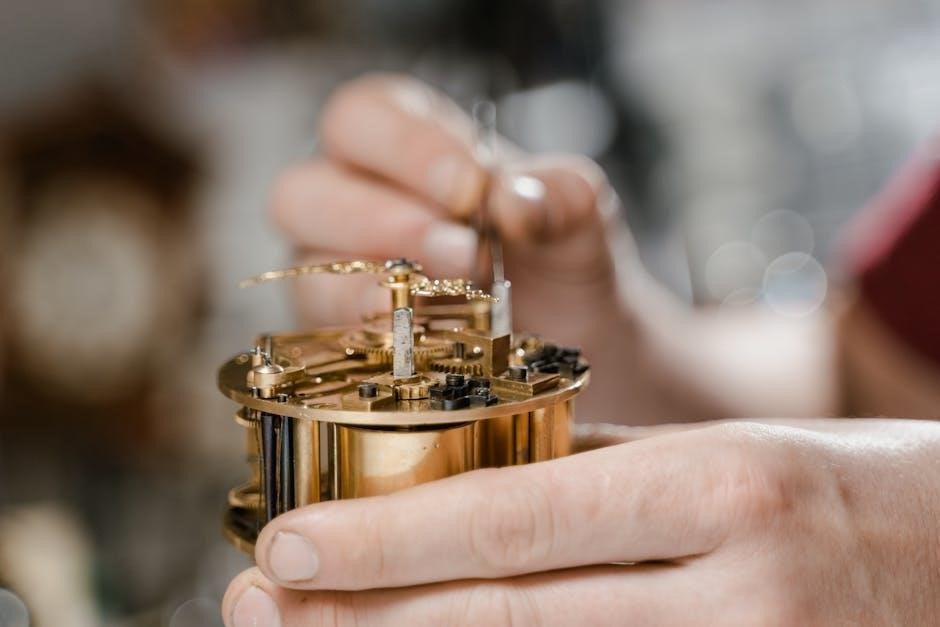
Regular cleaning and proper lubrication are vital for a Howard Miller clock’s longevity. Use safe cleaning procedures and recommended lubricants to maintain performance.
Safe Cleaning Procedures
Before cleaning, carefully discharge the weights and remove the pendulum. Gently dust the movement with a soft brush or canned air, avoiding forceful blasts. Use a specialized clock cleaning solution, applying it with a fine brush to dissolve old lubricant and grime.
Avoid harsh chemicals or excessive moisture, as these can damage delicate components. Clean each part individually, ensuring it’s completely dry before reassembly. Protect the dial and case during cleaning to prevent damage or discoloration. Patience and a gentle touch are key to preserving your clock’s integrity.
Recommended Lubricants for Howard Miller Clocks
Selecting the right lubricant is crucial for longevity. Use high-quality clock oil, specifically designed for mechanical movements, avoiding household oils. Moebius 9000 or similar synthetic oils are excellent choices for pivots and bearings, offering low friction and stability.
Apply sparingly with a fine oiler, targeting friction points. Graphite powder can lubricate gears without attracting dust. Avoid over-oiling, as excess lubricant attracts dirt. Regularly inspect and reapply lubricant as needed to maintain smooth operation and prevent wear.
Howard Miller Clock Specific Movement Types
Identifying your clock’s movement is key to successful repair. Howard Miller utilizes various movements; knowing the type guides troubleshooting and parts sourcing effectively.
Identifying Your Clock Movement
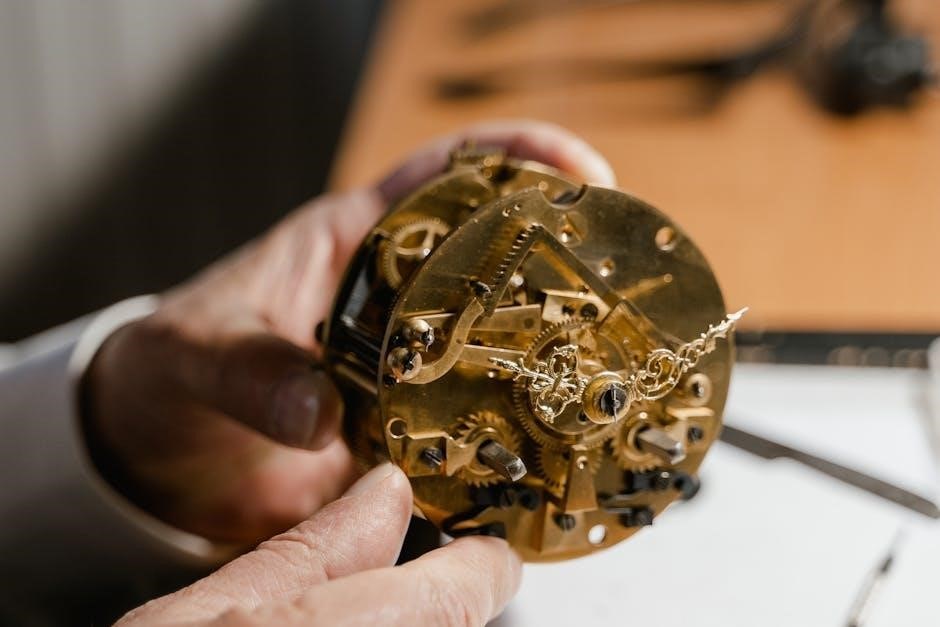
Precisely identifying your Howard Miller clock’s movement is the foundational step for any repair endeavor. Movements are often stamped with a model number, typically located on the backplate. Common types include mechanical weight-driven, quartz, and cable-driven movements. Consulting your clock’s original documentation, if available, is invaluable.
If documentation is missing, carefully examine the movement’s construction and operation. Note the presence of weights, cables, or a battery compartment. Online resources and clock forums can assist in identification based on visual characteristics and operational details. Accurate identification ensures you obtain the correct replacement parts and repair instructions.
Common Movement Issues & Solutions
Frequently encountered issues include clocks stopping, inaccurate timekeeping, or chime malfunctions. A common problem is dirt accumulation, hindering movement. Gentle cleaning with appropriate clock cleaning solutions is often effective. For inaccurate time, adjust the pendulum length – longer for slower, shorter for faster.
Chime issues often stem from synchronization problems; utilize the reset chime button. If these steps fail, a professional inspection may be necessary to address worn gears or require bushing replacement.
Finding Howard Miller Clock Repair Resources
For North America, contact Howard Miller’s Repair Technicians at (616) 772-9131. Outside North America, reach out to your local distributor or agent for support.
Official Howard Miller Repair Contact Information (North America & International)
For owners in North America experiencing issues with their Howard Miller clocks, direct assistance is readily available. Please contact one of their skilled Repair Technicians by calling (616) 772-9131. Be prepared to provide details about your clock and, if possible, proof of purchase.
If you reside outside of North America, the recommended course of action is to contact your local Howard Miller distributor or authorized agent. They will be best equipped to provide regional support and repair services tailored to your location and clock model.
Online Forums and Communities
Engaging with fellow Howard Miller clock enthusiasts online can be an invaluable resource for repair information and troubleshooting advice. Numerous forums and communities are dedicated to clock restoration and maintenance. These platforms offer a space to share experiences, ask questions, and learn from others’ expertise.
Searching online for “Howard Miller clock repair forum” will reveal several active groups where you can connect with knowledgeable individuals and potentially find solutions to your clock’s specific issues.

Preventative Maintenance for Howard Miller Clocks
Regular cleaning and proper placement are key to longevity. Dusting and avoiding extreme temperatures or humidity will help maintain your clock’s accuracy and beauty.
Regular Cleaning Schedule
Establish a consistent cleaning routine to preserve your Howard Miller clock’s appearance and function. Dust the case weekly with a soft, lint-free cloth. Monthly, gently clean the glass surfaces with a specialized glass cleaner, avoiding any harsh chemicals. Annually, a more thorough cleaning of the movement area – performed by a qualified technician – is recommended. This prevents dust buildup that can impede delicate mechanisms, ensuring accurate timekeeping and chime operation for years to come. Consistent care extends the clock’s lifespan significantly.
Proper Clock Placement & Environmental Considerations
Strategic placement is crucial for optimal Howard Miller clock performance. Avoid direct sunlight, which can fade the finish and affect movement accuracy. Maintain a stable temperature and humidity level, steering clear of areas prone to drastic fluctuations. Ensure the clock stands on a level surface to guarantee pendulum swing consistency. Protect it from excessive dust and vibrations, which can disrupt the delicate internal mechanisms, preserving its longevity and reliable operation.

Advanced Repair Considerations
Complex issues like gear or bushing replacement demand specialized skills and tools. These repairs often necessitate a professional clockmaker for accurate diagnosis and execution.
Gear Replacement
Replacing gears within a Howard Miller clock movement is a delicate process best left to experienced repairers. Identifying the correct replacement part is crucial, requiring precise measurements and movement knowledge. Removing a damaged gear often involves disassembling surrounding components carefully, noting their original positions. Installing the new gear demands proper lubrication and ensuring correct meshing with adjacent gears to maintain accurate timekeeping and chime functionality. Incorrect installation can lead to further damage or operational issues.
Bushing Replacement
Worn bushings are a common issue in Howard Miller clock movements, causing friction and inaccurate timekeeping. Replacing them requires specialized tools to carefully remove the old bushing and press in a new one without damaging the surrounding brass plates. Selecting the correct bushing size is vital for a proper fit and smooth operation. This task demands precision and patience, often best handled by a qualified clock repair professional to avoid further complications or damage to the delicate movement.
Understanding Clock Schematics & Diagrams
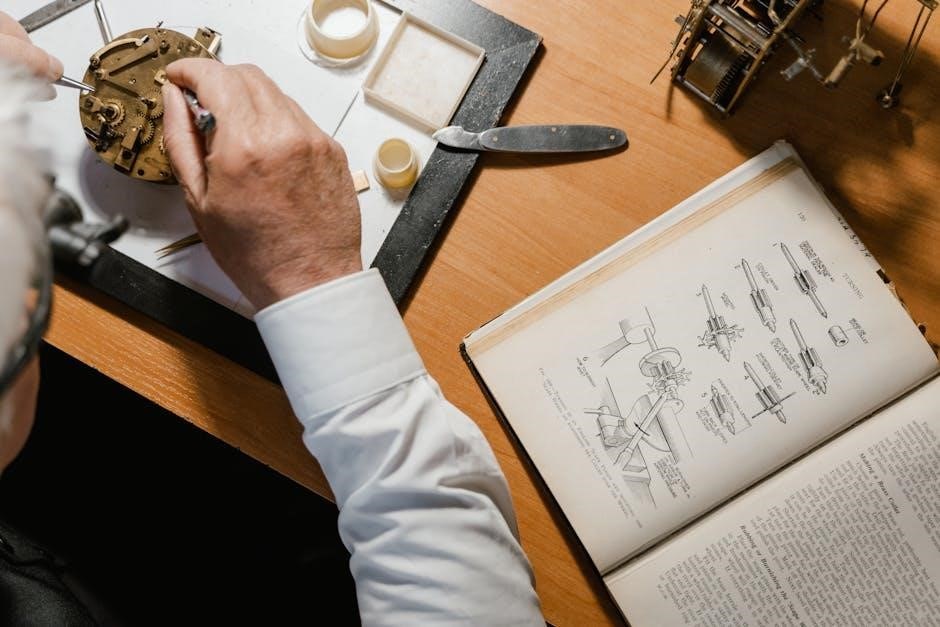
Clock schematics and diagrams are essential for repair, illustrating component layout and function. Locating these resources aids in disassembly, troubleshooting, and reassembly processes.
Locating Clock Schematics
Finding accurate schematics for your specific Howard Miller clock model is crucial. Start by checking the original owner’s manual, as some include basic diagrams. The official Howard Miller website may offer downloadable schematics or parts lists for certain movements. Online clock forums and communities are valuable resources; experienced members often share schematics they’ve collected. Additionally, specialized clock repair websites sometimes archive schematics. If these sources fail, contacting Howard Miller’s repair technicians directly might yield access to the necessary diagrams, though a fee may apply.
Interpreting Clock Diagrams
Clock diagrams depict the intricate arrangement of gears, levers, and springs within the movement. Understanding these schematics requires patience. Identify key components like the escapement, pendulum suspension, and chime mechanism. Trace the power flow from the weights through the gear train. Note any numbered parts, referencing the parts list for identification. Pay close attention to spring placements and lever interactions. Online tutorials and repair guides can aid in deciphering complex diagrams, ensuring accurate reassembly.

Safety Precautions During Clock Repair
Handle delicate components with care, and disconnect power if applicable. Avoid forcing parts; use appropriate tools. Protect your eyes and work in a well-lit area.
Working with Electricity (if applicable)
Many Howard Miller clocks, particularly those with electronic chimes or lighting, utilize electricity. Always disconnect the clock from the power source before commencing any repair work involving electrical components. Verify the power is off using a non-contact voltage tester. Exercise extreme caution when handling wiring, and never attempt repairs if you are uncomfortable or lack electrical expertise. If the clock has a battery, remove it as a first step; Consider professional assistance for electrical issues.
Handling Delicate Clock Components
Howard Miller clock mechanisms contain fragile parts – gears, springs, and pivots – susceptible to damage; Use gentle handling techniques; avoid applying excessive force during disassembly or reassembly. Work on a clean, well-lit surface, utilizing appropriate tools to prevent scratching or bending. Keep small components organized to avoid loss, and refer to diagrams for correct placement. Patience and a delicate touch are crucial for successful repair.
Resources for Parts and Supplies
Genuine Howard Miller parts are available through authorized dealers. Online retailers also offer a wide selection of clock repair components for various models.
Authorized Howard Miller Parts Dealers
Locating authorized dealers ensures you receive genuine Howard Miller replacement parts, crucial for maintaining your clock’s integrity and accuracy. These dealers possess specialized knowledge and can assist in identifying the correct components for your specific model. Contacting Howard Miller directly, or visiting their official website, provides a comprehensive list of authorized service centers and parts suppliers in your region.
Prioritizing authorized sources guarantees quality and compatibility, avoiding potential issues with aftermarket alternatives.
Online Retailers for Clock Repair Parts
Numerous online retailers specialize in clock repair components, offering a convenient alternative to authorized dealers. Websites like TimePartsUSA and Esslinger often stock Howard Miller specific parts, including weights, cables, and chime components. However, verifying part compatibility with your clock’s movement is essential before purchasing.
Carefully review product descriptions and utilize model numbers to ensure a proper fit, avoiding costly returns or incorrect installations.