Emerson Microwave Oven Manual: A Comprehensive Guide
This manual provides detailed instructions for operating your Emerson microwave oven, ensuring safe and efficient use․ It covers features, troubleshooting, and essential safety guidelines for optimal performance․
Understanding Your Emerson Microwave
Your Emerson microwave oven is a sophisticated appliance designed for convenient and efficient cooking․ It utilizes microwave energy to heat food quickly and evenly, offering a versatile alternative to traditional cooking methods․ Familiarizing yourself with its components and functionalities is crucial for maximizing its potential․
This appliance isn’t just for reheating; it boasts features like defrosting, pre-set cooking programs, and potentially sensor cooking – all aimed at simplifying meal preparation․ Understanding how these features interact will allow you to achieve optimal results with various food types․ The internal components, including the magnetron and waveguide, work together to generate and distribute microwave energy․
Regularly consulting this manual will help you navigate its capabilities and address any operational questions․ Remember, proper usage and maintenance are key to ensuring longevity and consistent performance from your Emerson microwave oven․ Safe operation is paramount, so always adhere to the outlined safety precautions․
Model Number Identification
Locating your Emerson microwave oven’s model number is essential for accessing specific support, warranty information, and replacement parts․ This unique identifier distinguishes your appliance from others and ensures you receive the correct assistance when needed․
The model number is typically found on a sticker located in one of several places: inside the door frame, on the back panel of the microwave, or on the bottom of the unit․ It’s usually a combination of letters and numbers, such as EM720031․ Record this number in a safe place for future reference․
When contacting Emerson customer support or ordering parts, having the model number readily available will expedite the process; It allows technicians to accurately diagnose issues and provide tailored solutions․ Furthermore, the model number is crucial when downloading specific manuals or accessing online resources related to your particular Emerson microwave oven․
Safety Precautions
Your safety is paramount when using the Emerson microwave oven․ Always ensure the appliance is properly grounded to prevent electrical shock․ Never operate the microwave if the door doesn’t close securely or if the seals are damaged – this can lead to microwave leakage․
Avoid heating sealed containers or eggs in their shells, as they may explode․ Use microwave-safe cookware only; metal objects can cause sparks and fire․ Do not attempt to dry clothes or other flammable materials in the microwave․
Supervise children when they are near the microwave, and instruct them about its proper use․ Regularly inspect the power cord for damage, and never immerse the appliance in water․ If the microwave malfunctions, disconnect it from the power source and contact qualified service personnel for repair․ Following these precautions will ensure safe and reliable operation․
Important Warnings and Grounding Instructions
To reduce the risk of fire, electric shock, or injury, heed these critical warnings․ Never operate the microwave empty, as this can damage the magnetron․ Avoid using harsh abrasives or flammable cleaners for maintenance – they can harm the appliance’s surface and internal components․
Grounding Instructions: This appliance must be grounded․ If an electrical short occurs, grounding provides a path of least resistance, reducing the risk of shock․ The power cord includes a grounding wire with an insulation sleeve green in color․
Never defeat the grounding prong․ Improper connection of the grounding wire can result in a risk of electric shock․ If a grounding outlet is unavailable, consult a qualified electrician for installation․ Do not modify the plug in any way․ Ignoring these warnings could lead to serious consequences․
Operating Instructions
Follow these simple steps to effectively utilize your Emerson microwave․ Learn to navigate the control panel, set cooking times, and select appropriate power levels for optimal results․
Control Panel Overview
The Emerson microwave’s control panel is designed for intuitive operation․ At the center, you’ll find the digital display, clearly showing cooking time and selected settings․ To the right are numerical buttons for direct time entry, allowing precise control over your cooking duration․ Below the display are frequently used buttons: ‘Start,’ ‘Stop/Clear,’ and ‘Power Level․’
The ‘Power Level’ button cycles through various power settings, from 10% for delicate defrosting to 100% for rapid cooking․ Pre-set cooking programs, such as ‘Popcorn,’ ‘Pizza,’ and ‘Reheat,’ are conveniently located for one-touch operation․ These programs automatically adjust cooking time and power for optimal results․ A ‘Sensor Cook’ function, if equipped, utilizes humidity sensors to determine the ideal cooking time․ The ‘Child Lock’ feature prevents accidental operation, ensuring safety․ Familiarize yourself with each button’s function for a seamless cooking experience․ Refer to the diagram on page 5 for a visual guide to the control panel layout․
Setting the Cooking Time
To set the cooking time manually, begin by pressing the numerical buttons on the control panel․ Enter the desired cooking time in minutes and seconds – for example, ‘1’ ‘2’ ‘3’ ‘0’ for one minute and thirty seconds․ The entered time will appear on the digital display․ If you make a mistake, press the ‘Stop/Clear’ button and re-enter the time․
Once the time is set, press the ‘Start’ button to initiate the cooking process․ The microwave will begin operating, and the remaining cooking time will be displayed․ You can pause the cooking process at any time by pressing the ‘Stop/Clear’ button․ To resume, simply press ‘Start’ again․ For shorter cooking durations, you can use the ‘Quick Start’ function, typically adding 30 seconds or 1 minute with each press of a designated button․ Always ensure the door is securely closed before starting, and avoid interrupting the cycle unnecessarily․ Remember to adjust power levels for optimal results․
Power Level Selection
Your Emerson microwave offers various power levels to accommodate different cooking needs․ Pressing the ‘Power Level’ button allows you to cycle through the available settings, typically ranging from 10% to 100%․ Each level corresponds to a percentage of the microwave’s full power output․ 100% power is ideal for quickly boiling liquids or reheating food, while lower levels are suited for delicate tasks like defrosting or simmering․
For example, 70% power is excellent for baking or slow cooking, preventing food from becoming overly dry or tough․ 50% power is often used for reheating casseroles or gentle simmering․ The selected power level will be displayed on the control panel․ Remember that lower power levels require longer cooking times․ Experiment to find the optimal setting for each recipe․ Always refer to your recipe for recommended power levels, and adjust as needed based on your preferences and the microwave’s performance․
Using Pre-set Cooking Programs
Your Emerson microwave features convenient pre-set cooking programs designed to simplify meal preparation․ These programs automatically adjust cooking time and power level for popular food items like popcorn, potatoes, pizza, and frozen vegetables․ To utilize a pre-set program, simply press the corresponding button on the control panel․ For instance, the ‘Popcorn’ button initiates a program optimized for popping a standard bag of microwave popcorn․
The microwave will then automatically begin cooking, displaying the pre-programmed time․ You can often adjust the cooking time slightly if needed, using the number pad․ Always ensure the food is suitable for the selected program․ Refer to the control panel’s labeling for specific program details and recommended food types․ These programs are a great time-saver, but monitoring the food during cooking is still recommended to ensure optimal results․ Experiment with the different programs to discover which ones best suit your cooking style․
Features and Functions
Explore advanced capabilities like sensor cooking, defrost settings, a child safety lock, and efficient turntable operation․ These features enhance usability and cooking precision․
Defrosting Guide
Proper defrosting is crucial for food safety and texture․ Your Emerson microwave offers a convenient defrost function, utilizing controlled power levels to thaw food evenly without cooking․ Always refer to food packaging for recommended defrosting times, as these can vary significantly based on weight and density․
To use the defrost function, select the appropriate food category (meat, poultry, fish, bread, etc․) if your model offers this option․ Otherwise, enter the weight of the food․ The microwave will automatically calculate the defrosting time․
Important Considerations: For larger items, rotate or flip the food halfway through the defrosting cycle to ensure uniform thawing․ After defrosting, cook the food immediately to prevent bacterial growth․ Remove any packaging before defrosting, especially materials containing metal․ If using the weight-based defrost, ensure accurate weight entry for best results․ Periodically check the food during defrosting and separate pieces if they begin to thaw unevenly․
Sensor Cooking Explained
Emerson microwaves equipped with sensor cooking technology automatically adjust cooking time and power levels for optimal results․ This intelligent system detects the humidity released from the food during cooking, ensuring it’s cooked to perfection without over or undercooking․
To utilize sensor cooking, simply select the appropriate food category (e․g․, potato, frozen dinner, fresh vegetables) from the control panel․ The microwave will then begin monitoring the steam emitted․ Avoid opening the door during the sensor phase, as this can disrupt the process and affect accuracy․
Key Benefits: Sensor cooking eliminates guesswork, providing consistently delicious meals․ It’s particularly useful for foods with varying moisture content․ The system learns and adapts, improving its accuracy over time․ Important: Ensure the microwave cavity is clean, as residue can interfere with sensor readings․ For best results, use microwave-safe containers and cover food loosely․
Troubleshooting: If sensor cooking doesn’t function correctly, verify the sensor window is clean and unobstructed․
Child Safety Lock Activation
The Child Safety Lock feature prevents accidental operation of the microwave by children․ This is a crucial safety measure, especially in households with young ones․ Activation typically involves pressing and holding a dedicated “Lock” or “Child Lock” button on the control panel for a few seconds․
When activated, the control panel will be disabled, and the display may show a lock icon․ Attempts to press any buttons will be ignored․ To deactivate the lock, repeat the same process – press and hold the “Lock” button again for several seconds until the lock icon disappears․
Important Considerations: Familiarize yourself with the specific lock activation procedure for your Emerson model, as it may vary slightly․ Always ensure the lock is deactivated when you intend to use the microwave․ This feature does not prevent the microwave from operating if power is interrupted and restored․
Caution: Do not rely solely on the child safety lock; always supervise children around the microwave․
Turntable Operation and Care
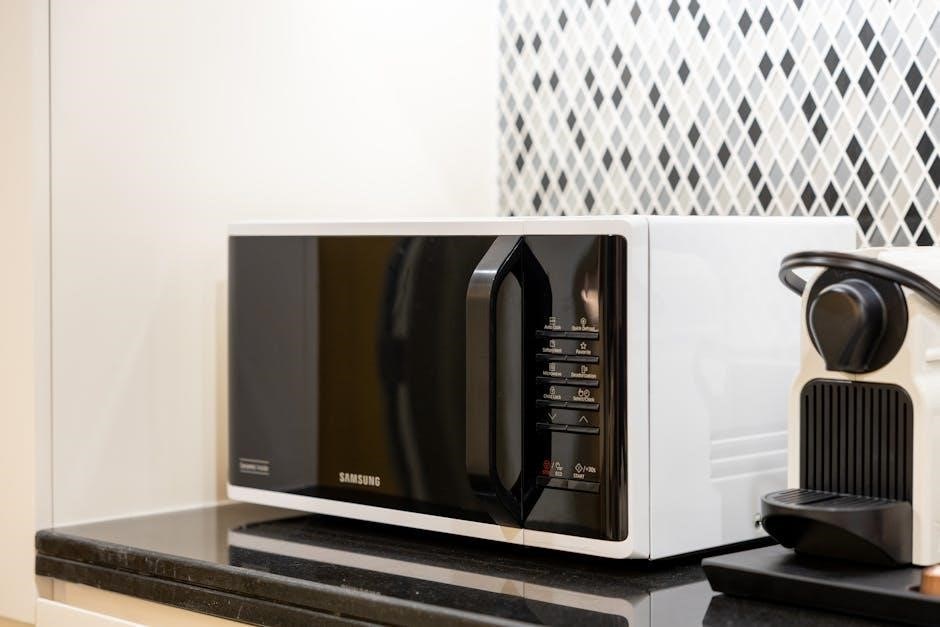
The turntable in your Emerson microwave ensures even cooking by rotating food through the microwave energy․ Ensure the turntable and its supporting roller ring are always correctly positioned within the microwave cavity before operation․ Proper alignment is vital for efficient and consistent results․
Cleaning the Turntable: Regularly clean the turntable and roller ring with warm, soapy water․ Avoid abrasive cleaners, as they can damage the surface․ Rinse thoroughly and dry completely before replacing․ Food splatters should be wiped up immediately to prevent sticking and buildup․
Important Notes: Never operate the microwave without the turntable and roller ring in place․ Doing so can cause uneven cooking and potentially damage the microwave․ If the turntable is broken or cracked, replace it with a genuine Emerson replacement part․ Caution: The turntable may be hot after use – allow it to cool before handling․
Proper care extends the life of your microwave and ensures optimal performance․
Maintenance and Troubleshooting
Regular cleaning and addressing minor issues will keep your Emerson microwave functioning optimally․ This section details solutions for common problems and upkeep procedures․
Cleaning Your Microwave Oven
Maintaining a clean microwave is crucial for both hygiene and performance․ Before cleaning, always unplug the appliance to prevent accidental activation․ Regularly wipe down the interior with a damp cloth and mild dish soap․ Avoid abrasive cleaners, as they can damage the surface․
For stubborn food splatters, heat a cup of water with a tablespoon of vinegar for several minutes․ The steam will loosen the debris, making it easier to wipe away․ Carefully remove the turntable and wash it separately with warm, soapy water․ Ensure it’s completely dry before replacing it․
The exterior of the microwave can be cleaned with a damp cloth and a mild cleaning solution․ Pay attention to the control panel, gently wiping away any spills or grime․ Regularly inspect the door seals for any food particles or damage․ A clean microwave ensures efficient cooking and prevents unpleasant odors․ Remember to dry all components thoroughly before reassembling․
Common Problems and Solutions
Encountering issues with your Emerson microwave is common, but many are easily resolved․ If the microwave doesn’t start, check the power cord and ensure the door is securely closed․ A sparking issue often indicates metal objects inside – remove them immediately! If food isn’t cooking evenly, try stirring or rotating it during the cooking process․
For a turntable that isn’t rotating, verify it’s properly seated on the drive․ A humming sound without heating could signal a faulty magnetron – professional repair is recommended․ If the control panel is unresponsive, try resetting the microwave by unplugging it for a few minutes․
Always consult the troubleshooting section of this manual before seeking professional help․ Remember safety first – never attempt repairs yourself if you’re uncomfortable․ Persistent problems may require a qualified technician to diagnose and fix the issue effectively, ensuring your microwave’s longevity․
Replacing the Fuse
Before replacing the fuse in your Emerson microwave, disconnect the power cord from the outlet – safety is paramount! Locate the fuse cover, typically on the rear panel, and remove it․ Carefully inspect the old fuse; if the wire inside is broken or the glass is blackened, it’s blown and needs replacement․
Important: Always use a fuse with the exact same amperage and voltage rating as the original․ Installing an incorrect fuse can create a fire hazard or damage the microwave․ Gently insert the new fuse into the holder and replace the fuse cover securely․
Reconnect the power cord and test the microwave․ If it still doesn’t work, the problem may lie elsewhere, requiring professional service․ Never attempt to bypass the fuse or use a higher amperage fuse – this is extremely dangerous and voids the warranty․ Proper fuse replacement ensures safe operation․
Troubleshooting Error Codes
If your Emerson microwave displays an error code, consult this section for guidance․ Error codes indicate specific issues, helping pinpoint the problem; Common codes include “F01” (door switch malfunction), “F02” (magnetron issue – do not attempt to repair yourself!), and “F03” (temperature sensor error)․
First, try resetting the microwave by unplugging it for several minutes, then plugging it back in․ If the error persists, note the exact code and refer to the detailed error code table in the full manual (available online at Emerson’s support website)․ Some codes may indicate a need for professional repair․
Do not ignore error codes! Continuing to operate the microwave with an error can cause further damage or pose a safety risk․ If you are uncomfortable troubleshooting, contact Emerson customer support or a qualified appliance technician for assistance․ Ignoring these signals can lead to more costly repairs․
Technical Specifications
This section details the Emerson microwave’s dimensions, weight, power consumption, and warranty details․ Refer to your specific model number for accurate information․

Dimensions and Weight
Understanding the physical specifications of your Emerson microwave is crucial for proper placement and ensuring it fits comfortably within your kitchen space․ The exterior dimensions typically range depending on the model, but a common size for a countertop microwave is approximately 19․1 inches wide, 14․8 inches deep, and 11․5 inches high․
However, always consult the specific model number listed on your appliance for precise measurements․ Internal cavity dimensions, which dictate the maximum size of dishes that can be accommodated, are also important․ These generally measure around 12․75 inches wide, 8․6 inches deep, and 10․2 inches high․
Weight is another key consideration, especially if you anticipate moving the microwave frequently․ Most Emerson countertop microwaves weigh between 30 and 35 pounds․ This weight can vary slightly based on the features and materials used in construction․ Accurate weight and dimension information can be found on the product label or within the comprehensive manual provided with your Emerson microwave oven․
Power Consumption
Understanding the power requirements of your Emerson microwave oven is essential for safe and efficient operation, as well as for managing your household energy usage․ Most Emerson microwave models operate on standard 120-volt, 60-Hz AC power․ The typical power consumption ranges from 600 to 1200 watts, depending on the model and its features․
The wattage directly impacts cooking speed and performance; higher wattage generally means faster cooking times․ However, it’s crucial to ensure your kitchen’s electrical circuit can handle the microwave’s power draw․ A dedicated 15-amp circuit is generally recommended․
Standby power consumption, the energy used when the microwave is not actively cooking, is usually minimal, around 1-3 watts․ Refer to the specific model’s label or the detailed manual for precise power consumption figures․ This information is vital for calculating energy costs and making informed decisions about appliance usage․ Always prioritize safety and adhere to the recommended electrical guidelines․
Warranty Information
Your Emerson microwave oven is covered by a limited warranty, protecting you against defects in materials and workmanship from the date of original purchase․ The standard warranty period is typically one year for parts and labor, though this can vary depending on the specific model and retailer․
This warranty covers manufacturing defects under normal household use․ It does not cover damage resulting from misuse, accidents, unauthorized repairs, or normal wear and tear․ To make a warranty claim, retain your original purchase receipt as proof of date and location of purchase․
Contact Emerson’s customer support team with your model number and a detailed description of the issue․ They will guide you through the claim process, which may involve troubleshooting steps or arranging for repair or replacement․ Warranty service is typically performed by authorized service centers․ See the included warranty card for complete details and limitations․